
 Post by
Every homeowner who calls our office with a remodeling idea eventually asks some version of the same question: will this actually pay off when I sell? What home renovations add the most value depends heavily on your local market, your home’s existing condition, and how a project is executed, but decades of cost-vs-value data and our own field experience across the Denver metro, foothills, and mountain communities point to a consistent pattern. Kitchen and bathroom updates, curb appeal projects, and targeted structural improvements tend to recover the highest percentage of their cost at resale, while highly personalized or over-built projects often underperform. This article breaks down which home renovations add the most value in 2026, what the numbers actually show, and how Colorado’s specific housing stock changes the calculation.
Ready to Start Your Project?
What Home Renovations Add the Most Value According to Cost-vs-Value Data?
Garage door replacement, manufactured stone veneer, and minor kitchen remodels consistently rank among the highest resale-value recovery projects nationally, often returning 80-100% of project cost, while major structural additions and luxury primary suite conversions typically return 45-65%. This pattern shows up year after year in the national Cost-vs-Value Report published by Remodeling magazine, which tracks average cost against estimated resale value across dozens of project types in different U.S. regions, including the Mountain division that covers Colorado.
The report’s Mountain-region figures usually run a few points higher than the national average for exterior projects, largely because curb appeal carries extra weight in markets where buyers are comparing homes on quarter-acre-plus lots against a backdrop of mountain views. A $4,300 steel entry door replacement, for example, has recovered close to 100% of cost in several recent report cycles, while a $150,000 upscale primary suite addition has landed closer to 40-50%. The gap between a small, visible upgrade and a large, invisible-to-the-eye structural project is often the single biggest surprise for homeowners planning their first renovation.
Which Home Improvements Have the Best ROI by Category?
Exterior and entry-level projects (garage doors, siding, stone veneer, front doors) generally post the best ROI, followed closely by minor kitchen updates and mid-range bathroom remodels. Big-ticket interior overhauls and specialty additions like sunrooms or swimming pools land at the bottom of most cost-vs-value tables.
Breaking this down further, three patterns hold up across almost every market we’ve studied or worked in around Colorado:
- Projects visible from the street (roofing, siding, garage doors, landscaping) tend to outperform interior-only projects on a percentage basis.
- Smaller, functional upgrades (a $28,000 minor kitchen remodel vs. a $155,000 major one) usually return a higher percentage of cost, even though the dollar-for-dollar gain is smaller.
- Additions that increase usable square footage in an unfinished space, such as a basement, tend to outperform additions that expand the building’s footprint, since the latter carries higher framing, foundation, and permit costs per square foot.
For homeowners deciding between a full-house overhaul and a room-by-room approach, this is one of the clearest arguments for prioritizing kitchens, baths, and exterior work before committing to a full whole-home renovation budget.
How Much Value Does a Kitchen Remodel Really Add?
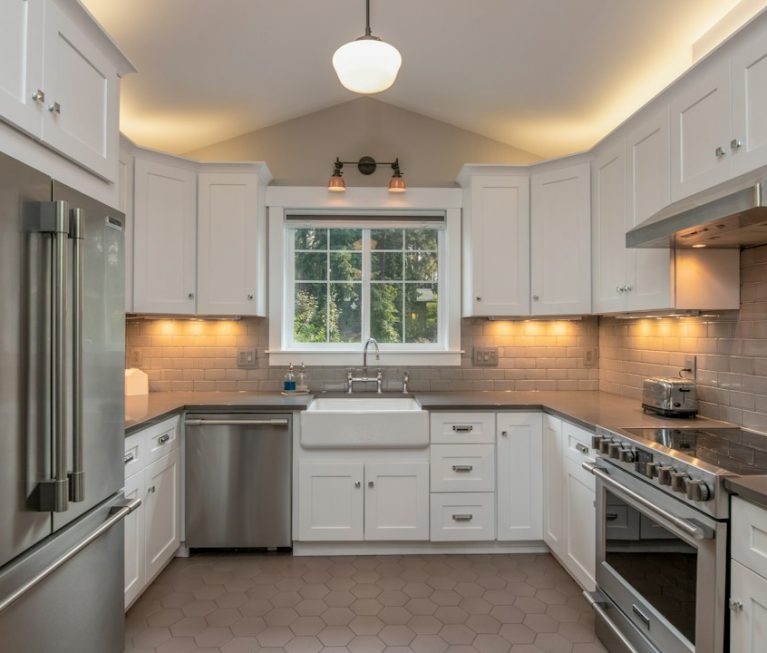
A minor kitchen remodel in the $28,000-$45,000 range typically recovers 75-96% of cost at resale, while a major upscale kitchen remodel above $100,000 often recovers only 35-50%, making kitchen ROI highly sensitive to scope and finish level. This is one of the most misunderstood parts of kitchen ROI: bigger spend does not automatically translate into a proportionally bigger return.
Denver-metro buyers in the $450,000-$750,000 range consistently respond well to mid-grade updates: refaced or replaced cabinets, quartz countertops (typically $55-$95 per sq ft installed), a tile backsplash, and updated stainless appliances. We’ve seen 1970s-1990s Denver-metro ranch and split-level kitchens gain $30,000-$50,000 in appraised value from a $35,000-$40,000 mid-range remodel, largely because the layout was already functional and didn’t require moving plumbing or gas lines. Once a project requires relocating a sink, range, or load-bearing wall, costs climb quickly and the percentage return softens.
Which Home Renovations Add the Most Value in a Kitchen Specifically?
Cabinet refacing or replacement, countertop upgrades, updated lighting, and energy-efficient appliances add the most value per dollar spent in a kitchen, while high-end features like commercial-grade ranges or custom cabinetry islands add less value proportionally. Countertops and cabinets alone typically account for 50-60% of a kitchen remodel budget and drive the majority of a buyer’s first impression.
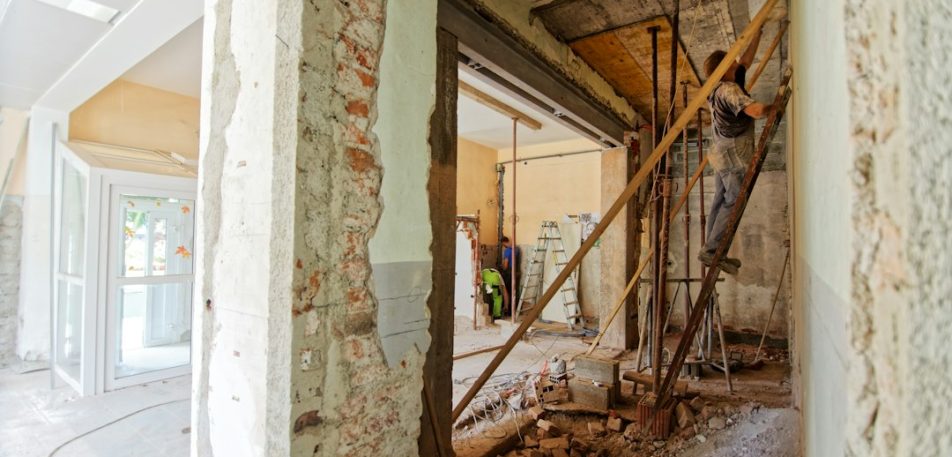
Layout changes matter too, but they need to be weighed against cost. Opening a kitchen to an adjacent dining or living room by removing a partition wall (non-structural walls run roughly $1,200-$3,000 to remove; load-bearing walls with a header and engineered beam can run $6,000-$15,000 once structural work and permitting are factored in) tends to add strong resale appeal in homes built before 2000, when compartmentalized floor plans were standard. Because we operate as a structural engineer-owned design-build firm, we’re able to evaluate a wall’s load path and stamp the plans in-house, which keeps projects like this moving through Jefferson County, Denver, and Summit County building departments without the delays that come from waiting on a third-party engineer. Homeowners exploring this option in more detail can review our small kitchen remodel layouts and cost breakdown or work directly with our kitchen and bathroom remodeling team to scope a project against expected resale return.
Do Bathroom Remodels Add More Value Than Kitchens?
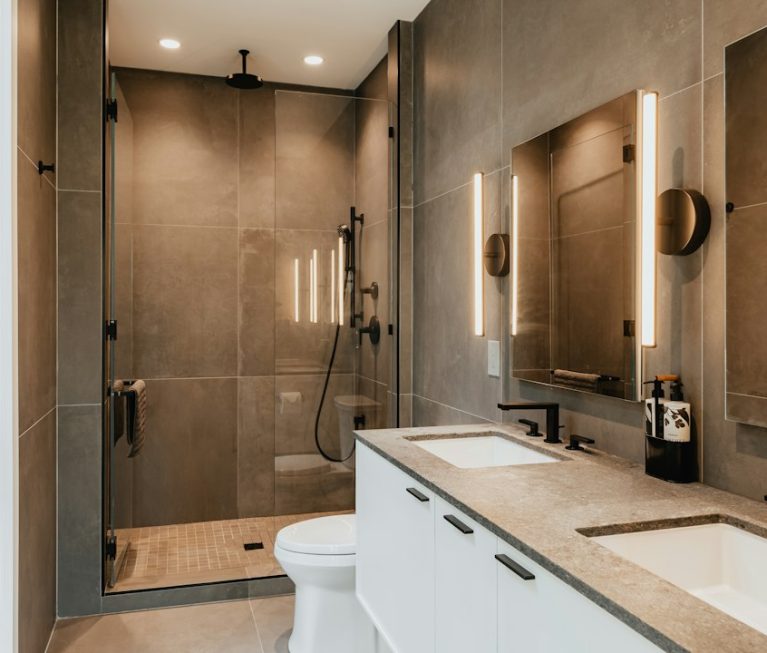
Bathroom ROI is generally more consistent than kitchen ROI, with mid-range bathroom remodels ($25,000-$35,000) often returning 65-75% of cost, though bathrooms rarely match a well-executed minor kitchen remodel’s percentage return. Bathrooms do have one advantage: they’re cheaper to execute well, so even a modest $15,000-$18,000 budget can produce a fully updated space that reads as new to a buyer.
What changes bathroom ROI most is the number of full bathrooms already in the home relative to bedroom count. A three-bedroom, one-bathroom home in Lakewood or Westminster gains disproportionately more resale value from adding a second full bath than a home that already has two and a half baths gains from remodeling an existing one. This is a critical distinction for homeowners trying to figure out which home improvements add value versus which simply improve daily comfort without moving the appraisal needle much.
Which Home Renovations Add the Most Value: Full Gut vs. Cosmetic Bathroom Update?
A cosmetic bathroom update (new vanity, fixtures, tile, paint, lighting) usually returns a higher percentage of cost than a full gut renovation, because it costs far less per square foot while still addressing the outdated finishes buyers notice first. A $8,000-$12,000 cosmetic refresh can often recover 80%+ of cost, while a full gut remodel with a walk-in shower conversion and heated floors, priced at $30,000-$45,000, tends to land closer to 60-70%.
That doesn’t mean gut renovations are a poor investment. In older mountain-community homes around Vail, Silverthorne, and Breckenridge, 1980s-era bathrooms often have degraded subfloors, outdated single-pane windows near the shower, and plumbing that no longer meets current fixture-unit code requirements. In those cases, a full gut renovation is less about ROI percentage and more about eliminating a defect that would otherwise show up on a buyer’s inspection report and trigger a price reduction anyway. For a full pricing breakdown across both approaches, our bathroom remodel cost guide for 2026 outlines typical ranges by scope, and our budget-conscious bathroom renovation strategies article covers how to prioritize spend when funds are limited.
How Much Does Curb Appeal Affect Resale Value in Colorado?
Curb appeal projects, particularly garage door replacement, stone veneer accents, updated siding, and landscaping, frequently rank among the top three to five highest-ROI projects nationally, and this holds especially true in Colorado’s foothills and mountain markets where exterior presentation is judged against dramatic natural surroundings. A steel garage door replacement averaging $4,300 has topped several recent national cost-vs-value rankings at close to 100%+ recovery, and Mountain-region figures often edge even higher.
Denver’s climate adds a practical dimension here too. Homes need to withstand hail (Colorado’s Front Range sees some of the highest hail-claim frequency in the country), intense UV exposure at altitude, and freeze-thaw cycles that stress asphalt shingles, stucco, and old wood trim. Buyers touring homes in Golden, Lakewood, or Greenwood Village increasingly ask about roof age, impact-resistant shingle class, and siding material specifically because of hail history, which means exterior updates using Class 4 impact-rated shingles or fiber-cement siding can carry extra resale weight beyond what a generic cost-vs-value percentage captures.
Which Home Renovations Add the Most Value on a Home’s Exterior?
Garage door replacement, entry door replacement, manufactured stone veneer, and fresh exterior paint or siding deliver the strongest exterior ROI, typically outperforming larger projects like new decks or window replacement on a percentage basis. Exterior window replacement still adds value, generally 65-70% cost recovery, but it costs considerably more per opening than paint or door work, which drags down its percentage return even though the total dollar value added can be significant.
For homeowners weighing which exterior project to prioritize first, we typically walk through this order of operations:
- Address any deferred maintenance items first (roof, gutters, trim rot) since these affect inspection outcomes regardless of ROI.
- Replace the garage door and entry door, both high-visibility, moderate-cost upgrades.
- Add stone veneer accents to the front elevation, typically $8-$12 per sq ft installed.
- Refresh landscaping and exterior lighting, budgeting $3,000-$10,000 depending on lot size and HOA landscaping requirements common in Westminster and Thornton developments.
- Consider siding replacement only if the existing material is failing or significantly dated.
A deeper walkthrough of exterior sequencing and materials appears in our exterior home remodeling guide, and homeowners working with an older property can also reference updating an older home’s exterior for guidance specific to pre-1980s housing stock common throughout the metro area.
Are Additions and Structural Renovations Worth the Investment?
Additions generally return less of their cost than kitchen, bathroom, or curb appeal projects, with wood deck additions around 65-70% and full two-story additions often in the 45-55% range, but they can still be the right move when a home is genuinely undersized for its lot and neighborhood. The math changes considerably depending on whether square footage is being added within the existing footprint (finishing a basement) or by expanding the structure (bump-outs, second stories, garage conversions).
Basement finishing tends to outperform ground-up additions because it avoids new foundation work, roofing, and exterior envelope costs. A $55,000-$75,000 basement finish that adds a bedroom, bathroom, and living area in a 900-1,100 sq ft space can add $50,000-$65,000 in appraised value in Denver-metro markets, particularly when it includes a legal egress window meeting IRC Section R310 requirements, since that egress compliance is what allows the new space to count as a bedroom for appraisal purposes. Our basement refinishing cost breakdown covers egress, moisture control, and ceiling height considerations specific to older Denver-area foundations.
Which Home Renovations Add the Most Value When Structural Changes Are Involved?
Structural renovations add the most value when they solve a genuine functional deficiency, such as a missing garage, insufficient bedrooms for the neighborhood norm, or a chopped-up floor plan, rather than when they simply add luxury square footage. A four-bedroom neighborhood with a three-bedroom outlier home will see stronger appraisal lift from a bedroom addition than a comparable home adding a home theater or wine cellar.
Because our ownership includes a licensed structural engineer, we evaluate every addition or load-bearing wall removal against the existing foundation, framing, and soil conditions before committing to a design, which matters considerably in areas like Golden, Silverthorne, and parts of Jefferson County where expansive soils and steep lots require engineered foundation designs rather than standard prescriptive footings. This reduces the risk of a redesign mid-permit review, a common cause of delay we see with other design-build firms in the region. Homeowners comparing a full addition against interior reconfiguration can find planning detail in our home addition cost guide for 2026, and our home remodeling services team can walk through whether an addition or a room-by-room renovation better fits a specific lot and budget.
What I’ve Learned Managing Which Home Renovations Add the Most Value Projects
After managing remodeling projects across the Denver metro and mountain corridor for years, the clearest lesson is that homeowners consistently overestimate how much luxury finishes add and underestimate how much layout, light, and functional square footage matter to resale value. I’ve watched clients spend an extra $15,000 upgrading to imported tile or a waterfall quartz island only to see appraisers and buyers respond almost identically to a $4,000 cheaper equivalent finish, simply because the layout and lighting were already doing the heavy lifting.
One project that stands out was a 1960s ranch in Lakewood where the owners wanted a full kitchen gut with custom cabinetry exceeding $60,000. After reviewing comparable sales within a half-mile radius, we recommended a $32,000 mid-range remodel instead, keeping the existing footprint but replacing cabinets, countertops, and appliances. The home appraised $46,000 higher eighteen months later at resale, a better percentage return than the original plan would have likely produced, and it freed up budget for a $9,000 garage door and front entry refresh that boosted curb appeal at the same time. That combination, modest interior update plus visible exterior work, has repeated itself often enough in our project history that it’s become close to a default recommendation for clients asking what home renovations add the most value on a fixed budget.
How Do You Compare Renovation Costs Against Expected Value Gain?
Comparing renovation costs against expected value gain requires looking at both the percentage of cost recovered and the absolute dollar value added, since a project with a lower ROI percentage can still add more total resale dollars than a smaller project with a higher percentage. This distinction gets lost in casual conversations about which home renovations add the most value, but it changes the decision for anyone financing a project against a specific home equity target.
The table below summarizes typical 2026 cost ranges and estimated resale-value recovery for common projects in the Denver-metro and mountain-community markets, based on recent national cost-vs-value patterns adjusted for regional Mountain-division figures.
| Renovation Project | Typical Cost Range | Estimated Value Recovery |
|---|---|---|
| Garage door replacement | $2,300 – $4,500 | 90 – 100%+ |
| Minor kitchen remodel | $28,000 – $45,000 | 75 – 96% |
| Manufactured stone veneer | $10,000 – $16,000 | 85 – 95% |
| Mid-range bathroom remodel | $25,000 – $35,000 | 65 – 75% |
| Basement finish (with egress) | $55,000 – $75,000 | 65 – 78% |
| Wood deck addition | $18,000 – $28,000 | 65 – 72% |
| Major upscale kitchen remodel | $100,000 – $180,000 | 35 – 50% |
| Two-story addition | $150,000 – $300,000+ | 45 – 55% |
Which Home Improvements Have the Best ROI When You Factor in Financing Costs?
When financing costs are included, smaller high-ROI projects like garage doors, stone veneer, and minor kitchen updates remain the best performers, since shorter loan terms and lower principal amounts reduce total interest paid relative to the value recovered. A $35,000 kitchen remodel financed over 5 years at typical home-improvement loan rates adds a modest interest cost compared to a $200,000 addition financed over 15-20 years, where cumulative interest can rival the original project cost.
This is one more reason we encourage clients to sequence projects rather than trying to fund everything at once. Tackling a kitchen or bathroom first, evaluating the resulting appraisal or comparable sales lift, and then deciding whether an addition is still justified tends to produce better financial outcomes than committing to a whole-house renovation budget up front. Homeowners weighing that sequencing decision may find our comparison of whole-home versus room-by-room renovation approaches useful before finalizing a budget.
Let’s Talk About Your Project
Get a Free Consultation → 720-468-0686 or email info@primestonecg.com
FAQ
What single renovation adds the most value to a home in 2026?
Garage door replacement continues to top most cost-vs-value rankings, frequently recovering 90-100%+ of its cost, followed closely by manufactured stone veneer and minor kitchen remodels, making these three the most reliable starting points when budget is limited.
Do kitchen or bathroom renovations add more resale value?
Minor kitchen remodels generally post a higher percentage ROI than bathroom remodels, but bathroom additions in homes with only one existing full bath can add more relative value than either, since bathroom count relative to bedroom count strongly influences appraised value.
Is it worth renovating before selling a house in Colorado?
Small, high-ROI projects like curb appeal updates, minor kitchen refreshes, and cosmetic bathroom work are typically worth completing before selling, while large structural additions rarely pay off in the short window before a sale due to their lower percentage cost recovery.
How accurate is the national cost-vs-value report for Colorado homes?
The report’s Mountain-division data is reasonably representative of Denver-metro and foothills markets, though mountain-resort communities like Vail and Silverthorne often see stronger returns on exterior and curb-appeal projects due to higher land values and buyer expectations around presentation.
Which home renovations add the most value without requiring a permit?
Cosmetic updates such as painting, cabinet refacing, lighting upgrades, and landscaping typically don’t require a permit and still recover a strong percentage of cost, whereas structural changes, electrical panel upgrades, and plumbing relocation almost always require permitting through the local building department regardless of project size.
Sources
National Association of Home Builders (NAHB)
U.S. Department of Housing and Urban Development (HUD)
Explore Our Services